



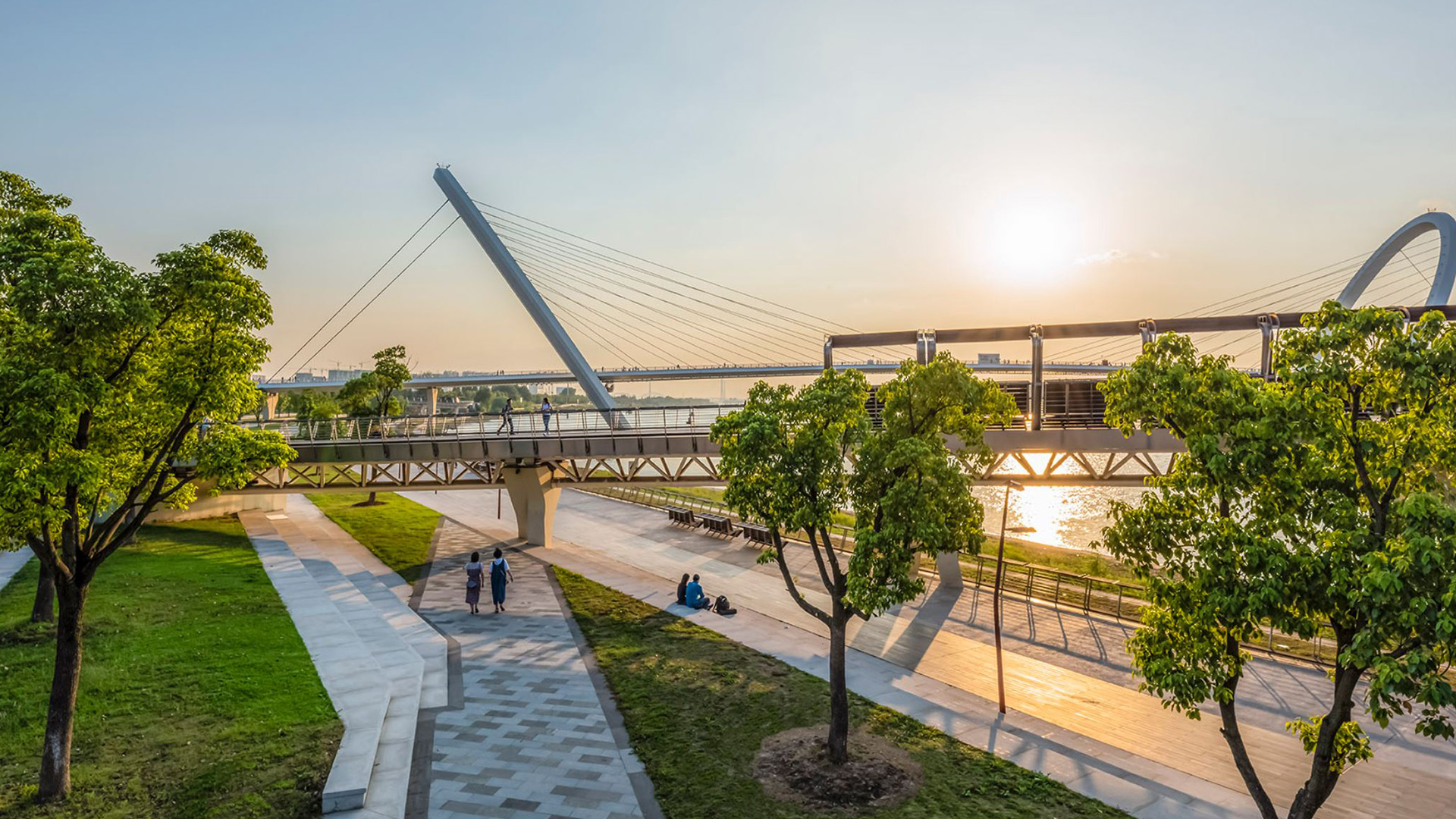
Nanjing, PR China
Nanjing Youth Olympic Park
Client
Nanjing Hexi New Town State-owned Assets Management Group Holdings Ltd.
Associated Firm
SWA Group
Project Team
Zaha Hadid Architects, CRCC Tunnel, Roadway and Infrastructure Engineering, CJDS Local Architects, Engineers and Landscape Architects, Southeast University Design Institute Local Landscape Architects, Nanjing Eye Bridge Engineers, Geotechnical Engineers, Hydrologists, Environmental Engineers, Water Feature Engineers, Irrigation Design, BPI Shanghai Lighting Design, Environmental Signage, Artists
Completion Date
2014
Size
175 acres
Image Credit
SWA Group
Awards
Council on Tall Buildings and Urban Habitat, three design awards in 2018
Developed as a 175-acre waterfront park and public realm destination for the 2014 Youth Olympic Games in Nanjing, China, the Nanjing Youth Olympic Park transformed a flood-prone stretch of the Yangtze River waterfront into a resilient and vibrant civic landscape. The Olympic torch was proudly carried through the park, reinforcing its significance as both a centerpiece of the Games and a lasting legacy for the city. Pamela Conrad served as Project Manager and primary collaborator with Zaha Hadid Architects, guiding the integration of design vision, public space, and environmental performance. Greg Barger led the project’s technical design, overseeing the complex coordination required to deliver a high-performing waterfront landscape at an international scale.
Sustainability was embedded throughout the project. Strategies included material reuse, flood control infrastructure, water harvesting and reuse systems, stormwater management, and water quality treatment through biofiltration landscapes. Native and naturalized plant communities reduced water demand while creating habitat and supporting biodiversity. Green roofs, porous paving, and locally sourced materials further enhanced environmental performance. Extensive pedestrian and bicycle networks, connections to public transit, and accessible waterfront promenades promote low-carbon mobility while fostering a walkable, biophilic destination that connects people with nature and the riverfront.


